


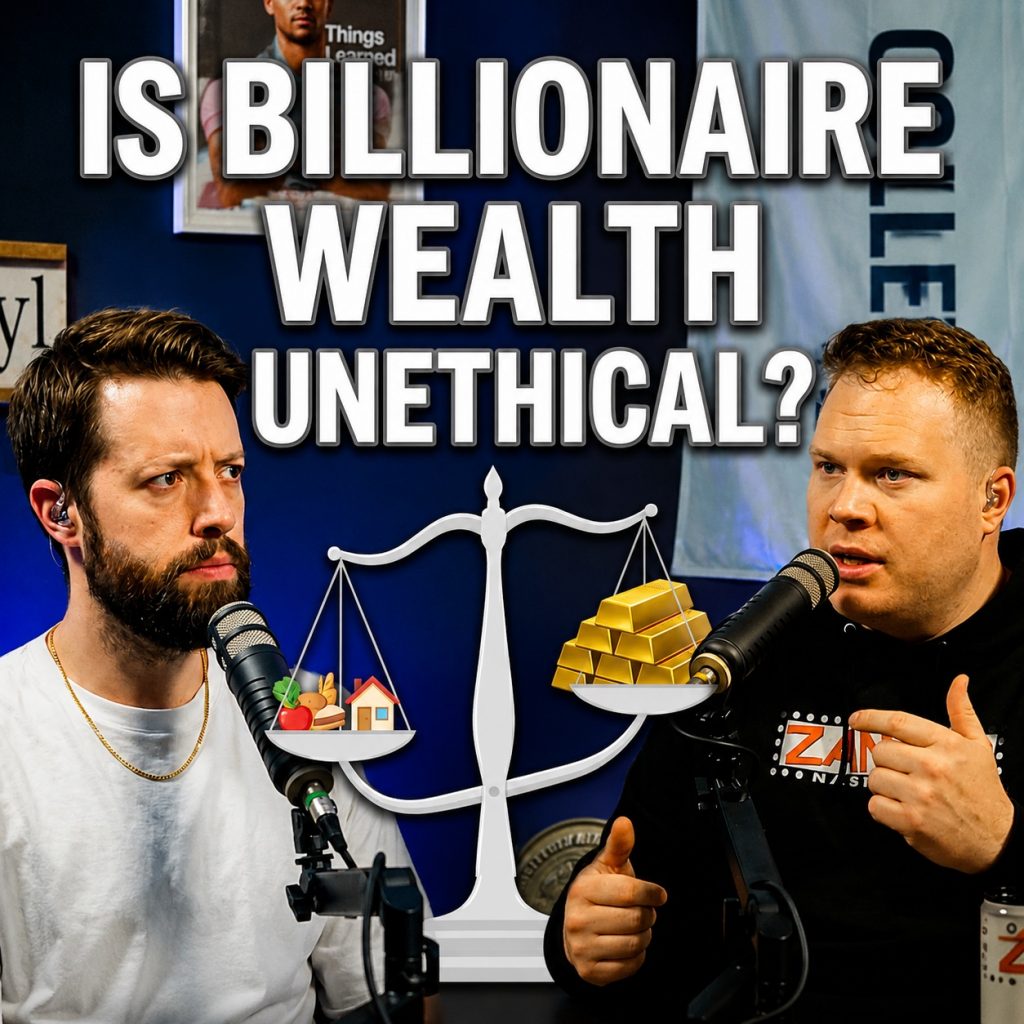
In an era of growing economic disparities, conversations about wealth distribution and its societal impact are more crucial than ever. Dr. Ingrid Robeyns, a distinguished academic from the University of Cambridge, offers a compelling and thought-provoking perspective through her concept of Limitarianism. This isn’t merely an economic model, but a profound moral philosophy that questions the very existence of extreme wealth and its implications for democracy, sustainability, and human well-being.
Robeyns’ work, initially a dense academic paper merging economics and ethics, has evolved into a widely discussed book: “Limitarianism: The Case Against Extreme Wealth.” Far from advocating for communism, Limitarianism proposes a moral and political upper limit on individual wealth accumulation. Let’s delve into the core arguments that underpin this fascinating concept.
The Journey from Economics to Ethics
Robeyns’ intellectual path began in economics before shifting to philosophy, specifically ethics. This unique multidisciplinary background enriches her analysis, allowing her to dissect complex economic structures through a moral lens that challenges conventional wisdom. Her transition highlights a crucial realization: economic systems are not just about numbers; they profoundly influence human values and societal structures.
Defining Extreme Wealth: Beyond the Ordinary Rich
A central tenet of Limitarianism is its precise definition of “extreme wealth.” This is not about the merely “rich” – your friend’s affluent parent, for example. Instead, Robeyns focuses on the ultra-wealthy, those whose fortunes are so vast that they transcend typical financial concerns and begin to exert disproportionate influence on society.
In her view, these individuals occupy an economic stratosphere that demands ethical scrutiny. Their wealth levels often raise questions about fairness, opportunity, and the fundamental structure of a just society.
Six Moral Arguments Against Extreme Wealth
Robeyns outlines six primary moral reasons why extreme wealth concentration is problematic:
1. Protection of Democracy and Political Equality
Extreme wealth fundamentally undermines democratic principles and political equality through:
- Buying Influence: The ultra-wealthy can directly or indirectly influence political outcomes through campaign donations, lobbying efforts, and funding specific political parties. This creates an uneven playing field where financial power translates into political power, marginalizing the voices of ordinary citizens.
- Controlling Information: Many ultra-wealthy individuals own or control significant media outlets, social media platforms, or publishing houses. This allows them to shape public narratives, disseminate information that serves their interests, and fund research or advertising campaigns to sway public opinion.
- Threat of Autocracy: Historically, billionaires have aligned themselves with autocratic regimes, using their wealth to facilitate the rise of dictators who, in turn, reward their benefactors with favorable policies and continued economic dominance. This subverts democratic processes and concentrates power in the hands of a few.
2. Ecological Sustainability and Climate Justice
Robeyns argues that extreme wealth is inherently incompatible with addressing the climate crisis:
- Disproportionate Ecological Footprint: The lifestyle of the ultra-rich—characterized by private jets, multiple large estates, and lavish consumption patterns—results in a significantly larger carbon footprint compared to the average person. For instance, the richest 1% contribute exponentially more to CO2 emissions than the global average.
- Investment Impact: The investments of the wealthiest individuals often fuel industries and practices that are detrimental to the environment, contributing a substantial portion of global emissions. Their capital is frequently directed towards ventures that prioritize profit over ecological well-being.
- Resource Misallocation: A significant amount of global wealth sits in the hands of a few, rather than being directed towards urgent climate solutions. This hoarding of resources prevents collective action and investment in sustainable technologies and infrastructure that could mitigate environmental degradation.
3. Argument from Moral Desert
This argument directly challenges the notion that extreme wealth is deserved purely through individual effort:
- The Lottery of Birth: No one is solely responsible for their success. Factors like one’s birthplace, family background, natural talents, intelligence, and health are all products of a “social” and “natural” lottery. These foundational advantages are not earned but are significant determinants of future success.
- Early Life Development: The first thousand days of a person’s life are critical for brain development, heavily influenced by parental care, environment, nutrition, and early exposure to education. Individuals cannot claim credit for these formative experiences that profoundly shape their capabilities.
- Social Debt: Wealth creation rarely happens in a vacuum. It relies on public infrastructure, legal systems, property protections, and centuries of collective human innovation and government-funded research (e.g., GPS and the internet). The ultra-rich benefit immensely from these societal foundations without fully compensating the systems that enabled their success. Many tech giants, for example, leverage public resources and then seek tax havens, effectively avoiding their “social debt.”
4. Economic Efficiency and Declining Marginal Utility
Robeyns highlights the inefficiency and moral implications of extreme wealth from an economic perspective:
- Diminishing Returns on Utility: Beyond a certain point, additional wealth has a negligible impact on the quality of life for the already ultra-rich. The marginal utility of another million dollars for a billionaire is almost zero, whereas that same amount could drastically improve the lives of many struggling individuals.
- Wasteful Accumulation: Hoarding vast sums of wealth by a few prevents that capital from being used to address pressing societal needs. A society where basic needs are met for the majority is generally more productive and stable for everyone.
- Opportunity Cost: Resources concentrated at the top mean fewer resources for public services, education, healthcare, and infrastructure, all of which benefit society as a whole. This disparity can lead to missed opportunities for societal advancement.
5. Social Stability and Reduced Crime
Extreme inequality poses a significant threat to social cohesion and can lead to various societal ills:
- Increased Social Discontent: Wide wealth gaps are empirically linked to higher crime rates, increased bullying, mental health issues, and corruption. This leads to widespread discontent and a sense of injustice within society.
- The Bunker Mentality: The behavior of many ultra-wealthy individuals—building bunkers or seeking isolated havens—reveals an awareness of the instability their accumulated wealth fosters. Instead of addressing the root causes of inequality, they seek to escape its consequences, creating a self-reinforcing cycle of separation and fear.
6. Tainted Wealth and Character Harms
Finally, Robeyns argues that the pursuit and accumulation of extreme wealth often come at a moral cost:
- Unethical Acquisition: Much extreme wealth is acquired through means that are either legitimately immoral or at least ethically questionable, such as predatory business practices, aggressive tax avoidance (which was often illegal in past decades), or benefiting from historical injustices.
- Character Degradation: Extreme wealth can negatively affect the character and well-being of the wealthy themselves. It can inflate egos, foster a sense of superiority, lead to irrational anxieties about losing wealth, and result in social isolation due to an inability to relate to others or a fear of being exploited. The pursuit of wealth can become an addiction, prioritizing numerical growth over genuine human connection and purpose.
Implementing Limitarianism: Political and Moral Limits
Robeyns proposes both a moral topline and a political topline for wealth. The moral topline, determined through research into what constitutes “too much wealth” for a good life, could be around one million euros in net worth. The political topline, which would be enforced through legislation, is suggested to be around ten million euros.
She provocatively suggests that once an individual’s wealth hits the political limit, a 100% tax could be applied to any further accumulation – a measure acknowledged as ethically ideal but politically challenging. These numbers, she notes, are fluid and would require regular re-evaluation based on economic and social changes. Critiques often center on how to define “the good life” or the potential impact on motivation. However, Robeyns implicitly suggests that motivation extends beyond mere financial accumulation, pointing to examples like the Green Bay Packers’ unique non-profit, fan-owned structure, where success is driven by love for the team rather than individual profit.
Conclusion: A Call to Re-evaluate Our Wealth Paradigms
Ingrid Robeyns’ Limitarianism offers a powerful ethical framework to critically examine extreme wealth. It compels us to move beyond conventional economic debates and consider the profound moral, social, and environmental implications of unchecked financial accumulation. While the path to implementing such a philosophy is undeniably complex, her work serves as a vital call to action: to envision and strive for a more equitable and sustainable world, one where the pursuit of individual wealth is balanced against the collective well-being of all.
Her arguments are a stark reminder that even if an ideal society seems distant, the pursuit of moral progress, much like the abolition of slavery, is a journey worth taking, one step at a time.
Things I Learned Last Night is an educational comedy podcast where best friends Jaron Myers and Tim Stone talk about random topics and have fun all along the way. If you like learning and laughing a lot while you do, you’ll love TILLN. Watch or listen to this episode right now!
Sources
Related Episodes
Tell Us What You Think of This Content!
Don’t forget to share it with your friends!