


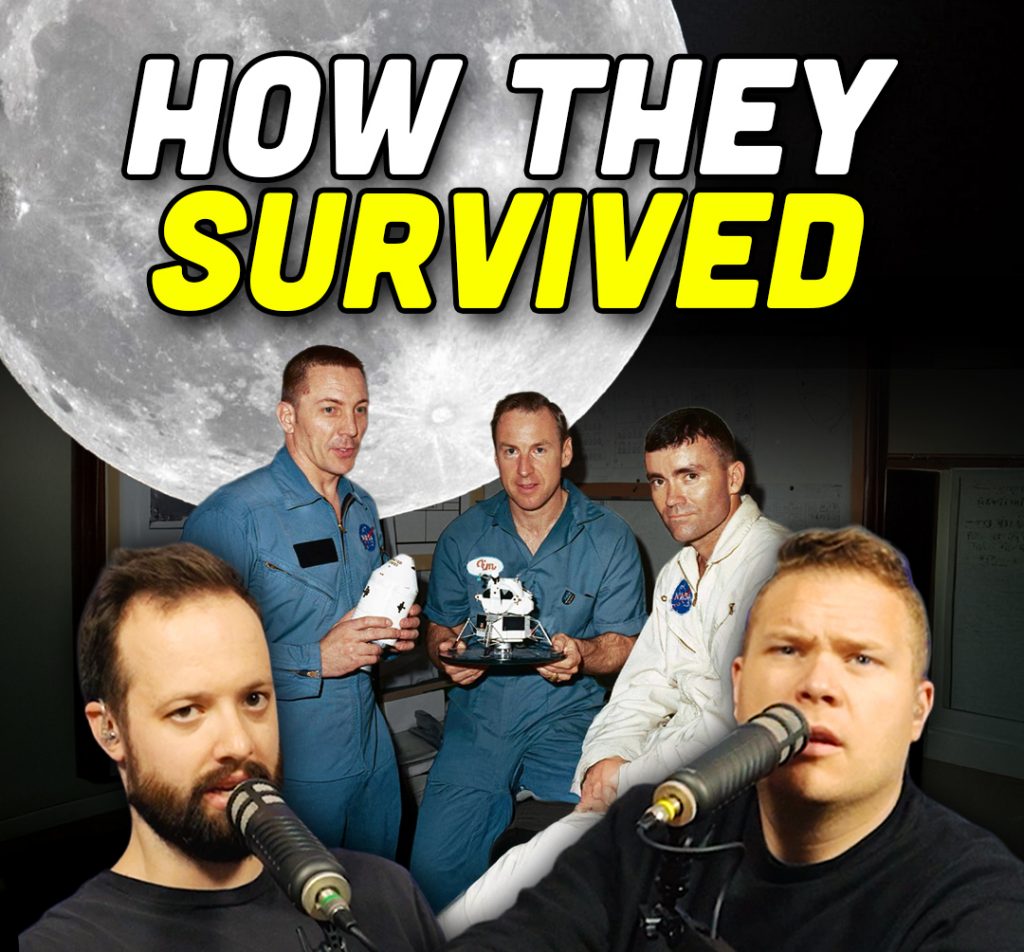
The Apollo 13 mission began as a routine trip to the moon. At first, many people barely paid attention. NASA had already reached the moon twice by then. But everything changed when an explosion put three astronauts in danger. What started as a quiet mission soon became one of the most dramatic rescue efforts in space history.
The Calm Start of Apollo 13
NASA launched Apollo 13 on April 11, 1970. The plan was to reach the moon, land, explore, and return safely. The crew included Jim Lovell, Fred Haise, and Jack Swigert. They had trained for years. By the time of this flight, both NASA and the American public felt confident.
Life inside the spacecraft seemed normal. The astronauts even filmed a broadcast to show people what life in space looked like. But no network aired it. People believed Apollo 13 would be predictable and straightforward.
They were very wrong.
“Houston, We Have a Problem”
Fifty-six hours into the mission, everything changed. The crew heard a loud bang. At first, they thought it was a joke, but then they saw the oxygen levels dropping fast. One of the oxygen tanks had exploded.
This moment led to one of NASA’s most famous messages:
“Houston, we have a problem.”
The explosion damaged oxygen systems, water lines, and temperature controls. The spacecraft quickly became unsafe. NASA had to find a way to get the astronauts home before they ran out of air, water, and power.
NASA’s Apollo 13 Crisis Plan
Mission Control worked nonstop. Engineers studied every inch of the spacecraft. They had to find solutions using only the limited items on board.
To survive, the astronauts moved into the lunar module. It was only designed to support two people for two days, not three people for four days. They needed more oxygen. NASA discovered that the carbon dioxide filters from the main module were the wrong shape. They were square. The filters in the lunar module were round.
This led to an important space “hack.” NASA guided the astronauts in building an adapter using tape, plastic bags, and pages from a flight manual. It worked. It kept them alive.
Racing Around the Moon for Survival
Turning around wasn’t possible. The spacecraft did not have enough fuel. NASA decided to use the moon’s gravity like a slingshot. Apollo 13 swung around the far side of the moon and began its long path back home.
Temperatures dropped. Water ran out. The astronauts drank only two milliliters a day. All three lost about 30 pounds during the return. Still, they stayed focused. They joked with each other and kept working.
Meanwhile, millions of people around the world waited and watched.
The Final Test: Re-Entry
Re-entry was the most dangerous part. The command module was damaged, and the angle had to be perfect. If it were too steep, the spacecraft would burn. If it were too shallow, it would skip off the atmosphere like a stone on water.
As Apollo 13 hit Earth’s atmosphere, all radio contact went silent. NASA expected this blackout to last four minutes.
But four minutes passed.
Then five.
Then six.
Finally, a voice broke through. The crew had survived. Soon after, cameras spotted the parachutes drifting toward the Pacific Ocean.
Apollo 13 was safe.
How Apollo 13 Changed NASA Forever
The Apollo 13 emergency pushed NASA to strengthen its safety systems. It also changed how engineers planned missions. Backup systems became more reliable. Training became more detailed. Apollo 13 proved NASA’s skill, teamwork, and creativity under extreme pressure.
Today, the Apollo 13 command module can be seen in a museum in Kansas. It stands as a reminder of one of NASA’s greatest rescues.
A Story of Skill, Courage, and Teamwork
Apollo 13 never landed on the moon, but it became one of NASA’s most important missions. It showed the world that even in the face of disaster, people can solve seemingly impossible problems. The bravery of the crew and the creativity of the NASA engineers turned a near-tragedy into a story of hope.
Things I Learned Last Night is an educational comedy podcast where best friends Jaron Myers and Tim Stone talk about random topics and have fun all along the way. If you like learning and laughing a lot while you do, you’ll love TILLN. Watch or listen to this episode right now!
Sources
Related Episodes
Tell Us What You Think of This Content!
Don’t forget to share it with your friends!