


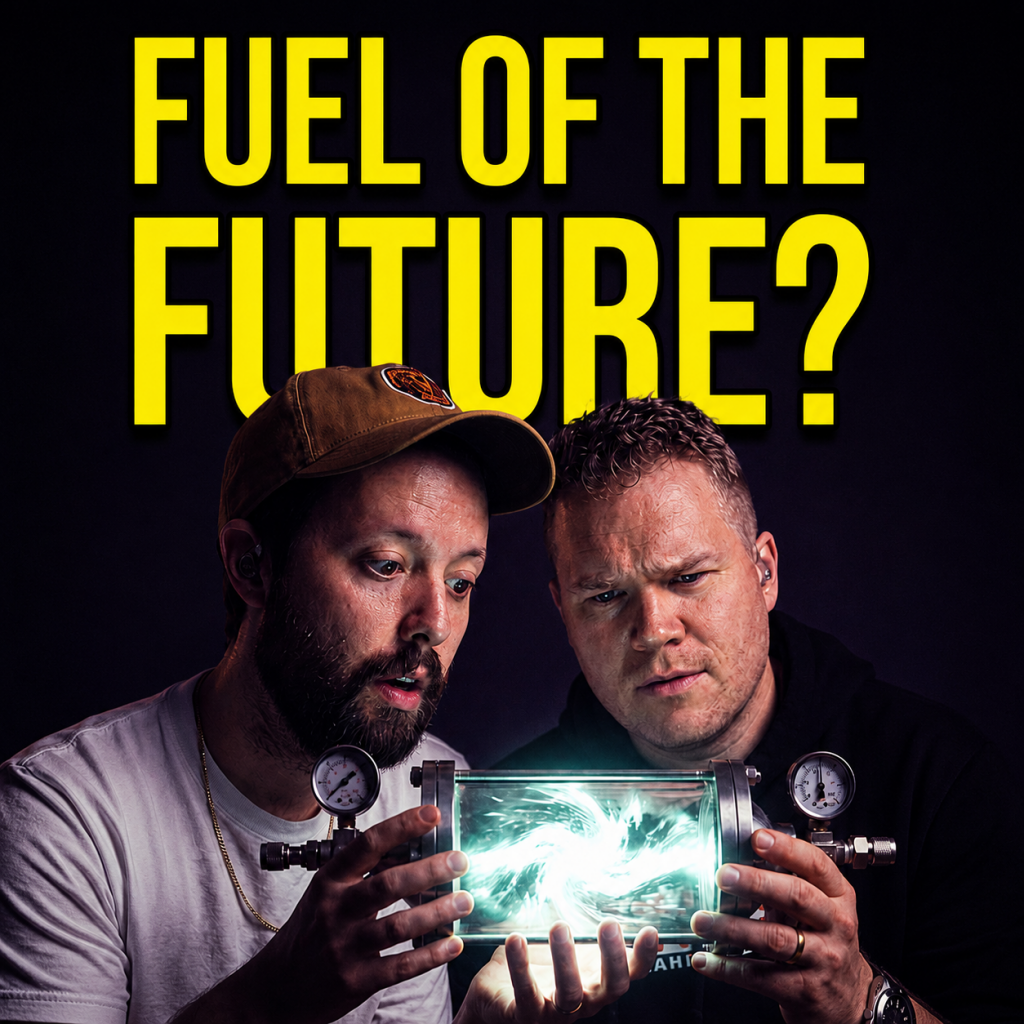
Ever wondered about scientists beyond Einstein or what happens when matter and antimatter meet? Buckle up, because we’re diving into the fascinating world of Paul Dirac, a brilliant mind who cracked some of the universe’s most profound secrets, including the existence of the “anti-world”!
Who Was Paul Dirac, Anyway?
Imagine an era dominated by physics giants like Einstein. It could be tough to stand out, right? But Paul Dirac, born in Bristol, England, with a Swiss father and an English mother, did just that. Initially an electrical engineering student, he quickly found his passion in mathematics, eventually studying at Cambridge. Talk about a career pivot!
Dirac was no ordinary academic. He was famously quiet, so much so that his friends jokingly called one word an hour a “Dirac.” This anecdote hints at his deep, focused nature – a pretty fascinating personality for someone who changed our understanding of the cosmos!
For Dirac, math wasn’t just numbers; it was beauty. He’d spend his free time re-solving famous equations, driven by a deep love for the elegance of mathematical solutions.
The Clash of Giants: Einstein, Quantum Mechanics, and a Missing Link
Back in Dirac’s day, the physics world was buzzing with two groundbreaking theories:
- Einstein’s Special Relativity: Describing the relationship between space and time.
- Schrödinger’s Quantum Mechanics: Delving into the bizarre, probabilistic world of tiny particles (and his famous cat!).
Both were brilliant, proven by math and experiments, but they didn’t quite fit together. There were inconsistencies, questions that lingered. It was like having two perfect puzzle pieces that just wouldn’t snap into place.
Dirac’s Brilliant Solution: The Equation that Changed Everything
Enter Paul Dirac, the math enthusiast. He took on the challenge of harmonizing these two behemoths. He essentially combined Einstein’s famous E=MC² with quantum mechanics, resulting in what’s now known as the Dirac Equation. This wasn’t some minor tweak; it was a profound breakthrough that earned him a Nobel Prize! It mathematically proved the link between what seemed like disparate theories.
Now, the Dirac equation is pretty complex, involving imaginary numbers, poly matrices, and four-dimensional derivatives. But at its core, it connected relativity and quantum mechanics in a way no one else had conceived.
For example, part of this equation involves “fermion mass.” If you’re wondering what a fermion is, it’s essentially an elementary particle, similar to a boson like the Higgs boson – which many of us might recognize! While bosons have a full integer spin, fermions have a fractional spin. Dirac’s genius was in incorporating these fundamental properties into a unified theory.
The Anti-World Revealed: The Birth of Antimatter
Here’s where things get truly mind-bending. A revolutionary implication of Dirac’s equation was the prediction of antimatter. Yes, the anti-world isn’t just for science fiction like Stranger Things; it’s a fundamental part of our universe!
Think about how matter is formed: two high-energy photons collide, creating both matter and antimatter. For example, a hydrogen molecule consists of a proton and an electron. Antimatter is simply the opposite:
- Anti-hydrogen: Composed of an antiproton and a positron (which is like an anti-electron, with a positive charge).
Annihilation: Matter Meets Its Match
The most dramatic property of antimatter is what happens when it meets matter. They annihilate each other. Poof! Gone. They cancel out completely, producing pure energy in the form of gamma rays. This process is 100% efficient, meaning all the mass is converted into energy – way more efficient than any process we have to create energy here on Earth!
The Universe’s Greatest Mystery: Why Are We Here?
This brings us to a cosmic head-scratcher. If the Big Bang created equal amounts of matter and antimatter, and they annihilate upon contact, why is there any matter left at all? The universe should be nothing but gamma rays!
Yet, here we are, enjoying podcasts and pondering antimatter. Scientists call this the “baryon problem.” For every billion particles of antimatter, there seems to be one particle of matter left over that didn’t find its antimatter pair. This tiny imbalance is the reason for stars, galaxies, planets, and…well, us! We don’t fully understand why this imbalance exists, making it one of the greatest unsolved mysteries in physics.
Antimatter: The Future of Energy and Space Travel?
So, what are the practical implications of antimatter, beyond blowing things up (which we can talk about later, maybe)?
Powering the World
Antimatter holds immense potential for energy:
- Incredible Energy Density: Just one kilogram of antimatter, if we could produce it, could power the entire Earth for a day! That’s 180 petajoules of energy.
- Clean Energy: Antimatter-matter annihilation produces pure energy with no waste products. Imagine a completely ash-free, smoke-free energy source.
Currently, producing antimatter is incredibly slow and expensive – it would take a billion years running our colliders 100% of the time to make a single kilogram! But ongoing research could change that.
Interstellar Journeys
Antimatter could also revolutionize space travel:
- Efficient Fuel: Antimatter fuel would offer vastly more energy than chemical rockets, consuming significantly less mass.
- Faster Travel: Theoretically, antimatter propulsion could enable us to reach significant fractions of the speed of light, making interstellar travel to other star systems possible within years, not centuries.
The Latest Breakthrough: Transporting Antimatter!
A groundbreaking experiment recently occurred at CERN. Scientists successfully transported antimatter outside the Large Hadron Collider for the first time! This is huge because antimatter can’t touch anything without annihilating. They used specialized “penning traps”—magnetic and electrode-powered vacuums—to contain tiny amounts of antimatter.
This technology, encased in a large, cryogenically sealed unit, was loaded onto a truck and driven for half an hour. The result? Success! The antimatter particles remained contained. While transporting single particles isn’t a large-scale energy release, this unlocks the ability to study antimatter in dedicated labs, away from the collider’s interference. This is a crucial step towards understanding how to produce it more efficiently and leverage its incredible potential.
Antimatter in Medicine: PET Scans
Perhaps surprisingly, antimatter already has a real-world application in medicine! PET (Positron Emission Tomography) scans use antimatter to create detailed 3D images of our insides.
Here’s how it works:
- A radioactive molecule disguised as sugar is injected into your bloodstream.
- This molecule breaks down, emitting a positron (antimatter).
- The positron collides with an electron (matter) in your body.
- This collision produces gamma rays.
- A PET scanner detects these gamma rays and triangulates their origin, creating a precise map of internal activity.
PET scans are invaluable for detecting tumors, mapping the brain before surgery, and other advanced medical imaging.
The Ultimate Anti-Mystery: An Anti-Earth?
Here’s a thought to keep you up at night: Because light from matter and antimatter behaves identically, scientists theorize that distant star systems or even entire galaxies we observe could actually be made of antimatter! We wouldn’t know until we got close enough to study them with instruments.
This spooky idea implies there could be an “anti-you” on an “anti-Earth” looking up at the same stars tonight. If our matter selves were to ever meet our antimatter counterparts… well, let’s just say it wouldn’t end well for either of us. It’s a truly wild possibility born from profound scientific discovery.
From a quiet mathematician in the Einstein era to the potential for limitless clean energy and interstellar travel, the story of Paul Dirac and antimatter is a testament to the boundless mysteries and incredible potential hidden within the universe. It shows us that sometimes, the most profound answers come from asking the simplest questions, even if they uncover the most complex realities.
The Takeaway
Dirac’s work linked the biggest scientific theories of his time and predicted antimatter – a particle that, in essence, shouldn’t let us exist! We’re still unraveling the mystery of why matter, and therefore us, exists at all. Antimatter might be the key to revolutionary energy and space travel, and it’s already helping us in medicine. The universe is incredibly strange, and we’ve only just begun to understand its anti-secrets!
Things I Learned Last Night is an educational comedy podcast where best friends Jaron Myers and Tim Stone talk about random topics and have fun all along the way. If you like learning and laughing a lot while you do, you’ll love TILLN. Watch or listen to this episode right now!
Sources
Related Episodes
Tell Us What You Think of This Content!
Don’t forget to share it with your friends!