


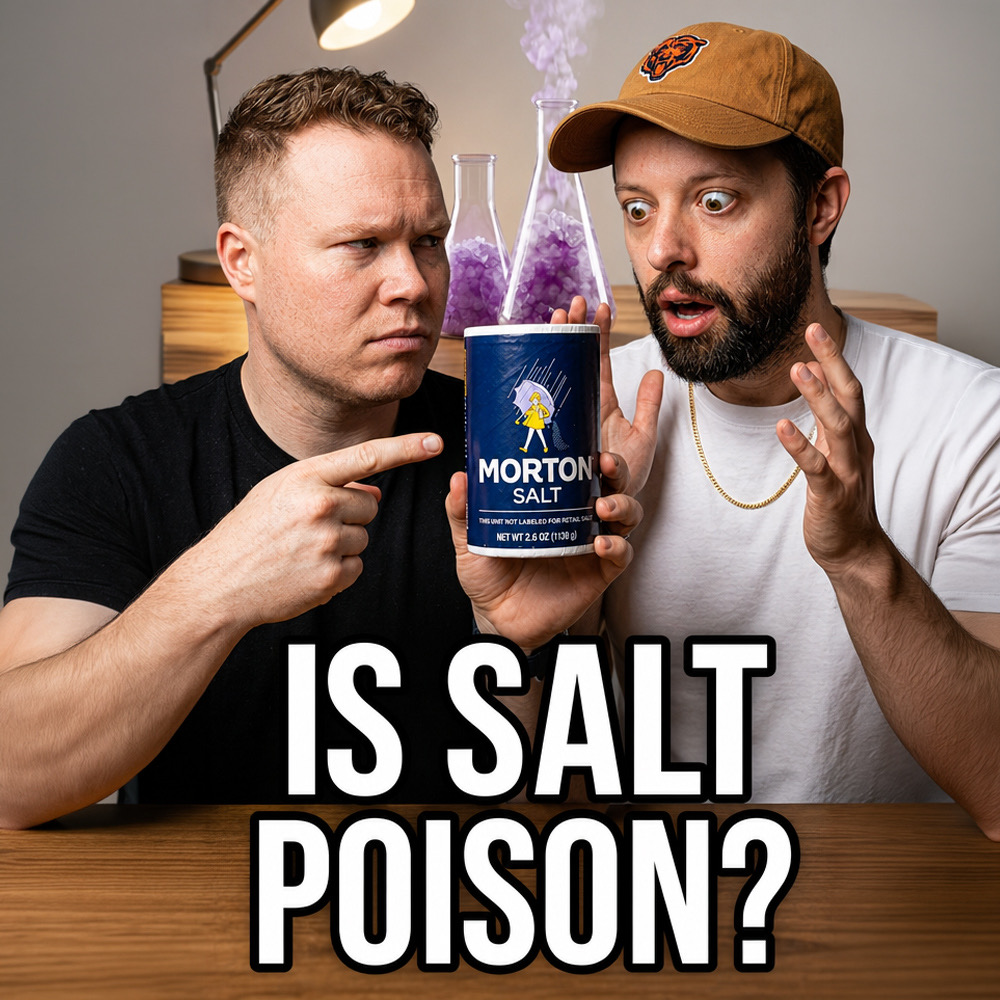
Have you ever heard of iodine? Most of us probably associate it with something doctors use during medical scans, or maybe that stuff in iodized salt. But what if I told you this seemingly small mineral plays a huge, often unseen role in our health and even our intelligence? Well, buckle up, because we’re diving deep into the fascinating world of iodine, and trust me, it’s a wild ride.
What Exactly is Iodine?
Iodine, at its core, is a chemical element, a true mineral. You might picture it as a solid, but in its element form, it’s actually a beautiful, purplish, heavy metal. And no, that doesn’t mean it listens to loud music; it means it’s super dense! This dense nature gives it some pretty cool properties.
One of the most interesting things about iodine is what happens when it interacts with starch. Ever seen those science experiments where iodine drops turn a potato dark blue or black? That’s iodine at work! This property is actually used in those pens that verify if a US dollar is counterfeit. Since paper is a starch, a real dollar (made of cloth) won’t react, but a fake paper one will turn dark.
The Irony of Iodine: Poison and Essential Nutrient
Here’s a mind-bending truth: iodine is both a poison and an essential nutrient. In large amounts, it can be toxic, just like pretty much anything if you overdo it. But in the right, tiny amounts, it’s absolutely vital for human life.
How tiny are we talking? The recommended daily intake is a mere 150 micrograms – that’s smaller than a teaspoon of salt! Any more than that, and you start running into risks. But without that small amount, our bodies can face serious health consequences.
The Thyroid Connection: Your Body’s Growth Regulator
The most important organ for iodine regulation in our body is the thyroid gland. This butterfly-shaped gland in your neck is responsible for creating crucial compounds like T3 and T4. These aren’t just fancy names; they’re essential for a whole host of bodily functions, with one of the biggest being growth.
- For Kids: Iodine is super important, especially when you’re young and even in the womb, because it’s what helps create those T3 and T4 hormones that are critical for proper development.
- For Adults: These compounds also regulate your metabolism, among other things.
Your pituitary gland acts like the general manager, sending signals to the thyroid when T3 and T4 levels are low, prompting it to produce more. The thing is, the pituitary gland is great at recognizing deficiencies, but not so much at knowing when there’s too much.
If your thyroid isn’t getting enough iodine, it can go into overdrive trying to produce these hormones, leading to various issues like weight gain and other health problems. In extreme cases, a historical condition called goiter can develop.
Goiters: A Visible Sign of Deficiency
Imagine a large, visible swelling in your neck – that’s a goiter. For most of history, people didn’t understand what caused these growths. Surprisingly, early treatments often involved sea sponges, which happened to contain a decent amount of iodine. People just didn’t realize why it worked at the time!
Geographic Disparities and Cretinism
Historically, our primary source of iodine came from the food we ate, specifically plants that absorbed it from the soil. The closer you lived to the ocean, the more iodine was naturally present in the soil due to rainwater. Move further inland, or live in areas once covered by glaciers (like parts of Northern Europe), and iodine in the soil becomes scarce.
This geographical disparity led to widespread iodine deficiency, particularly in regions like the Netherlands and Norway. Beyond goiters, a more devastating consequence of severe iodine deficiency, especially during pregnancy, was cretinism.
Cretinism used to be a leading cause of preventable intellectual disability, resulting in stunted physical and mental growth in children whose mothers were iodine deficient during pregnancy. The good news is, thanks to a major public health initiative, cretinism is almost entirely eradicated in the Western world today.
The Iodized Salt Revolution
Recognizing the widespread impact of iodine deficiency, particularly after World War I (when many recruits from inland areas like Michigan were found medically unfit to serve due to goiters), doctors proposed an ingenious solution: iodizing salt. Since everyone uses salt, it was the perfect vehicle to deliver this essential mineral.
This initiative took off in the 1920s, and while it had its early resistance (Morton Salt initially found it difficult to specifically iodize only for Michigan), the benefits soon became undeniable. Iodized salt quickly became recognized as a vital part of a healthy diet, leading to a remarkable public health success story.
IQ Boost: A Hidden Benefit
What’s truly astounding is a discovery made in 2013. Researchers analyzed data from military mental exams taken between WWI and WWII. They found that the average scores of WWII recruits were significantly higher – about 15 IQ points on average! This massive leap is attributed to the widespread adoption of iodized salt, meaning better brain development for an entire generation.
In fact, it’s estimated that iodized salt contributed to a whopping 180 million-point increase in IQ worldwide over the 20th century, primarily because fetuses were getting enough iodine for their brains to grow properly. Pretty incredible, right?
The Modern Iodine Crisis: Are We Getting Enough?
While we celebrated the success of iodized salt, a new challenge has emerged in the last 20 years: a noticeable increase in iodine deficiencies, particularly in the US. Why the rollback?
- Dietary Shifts: Many chefs and home cooks have gravitated towards kosher and sea salts, which, unlike iodized table salt, typically lack iodine. How many recipes have you seen lately that specify “iodized salt”? Probably not many!
- Dairy Changes: Historically, dairy was a significant, albeit unintentional, source of iodine. Trace amounts of iodine from cow feed and, more surprisingly, from idophor disinfectants used on milking equipment, found their way into milk. However, a push in the early 2000s to remove these chemicals from our food supply meant a key source of incidental iodine was lost.
- Processed Foods: Many processed foods, while high in sodium, don’t use iodized salt. Plus, conscious efforts to reduce overall sodium intake, while good in many ways, can inadvertently reduce iodine intake if people aren’t choosing iodized options.
What This Means for You (and Your Kids)
If your mother was iodine-deficient during pregnancy, those developmental issues are often irreversible. Similarly, adolescent deficiencies can have lasting effects. However, as an adult, many iodine deficiency issues can be reversed through dietary changes or supplementation.
Here’s the thing: our average iodine levels during pregnancy have plummeted from 327 micrograms per liter in 1971 to 144 micrograms per liter today – almost cut in half. As children born after 2000 grow up, we might see a resurgence of thyroid diseases, deficiencies, and even goiters. We’re essentially creating a new generation with an iodine deficit.
The Simple Solution: Cook with Iodized Salt!
Seriously, it’s that easy. There are plenty of “health gurus” trying to sell you expensive iodine supplements, but you don’t need them. Just use iodized salt when you cook. Many taste tests have shown that, for the average person, there’s no noticeable difference in flavor between iodized and non-iodized salts. Chefs might claim they can tell, but for most of us, it’s just not true.
So, next time you’re in the kitchen, grab that iodized salt. It’s a simple, affordable way to ensure you and your family are getting this crucial mineral, supporting smarter brains, healthier thyroids, and preventing conditions that could otherwise sneak up on us.
It’s mind-boggling that something so basic can have such a profound impact, isn’t it? Our health, and even our collective intelligence, might just hang in the balance of a tiny crystal of iodized salt. Go figure!
Things I Learned Last Night is an educational comedy podcast where best friends Jaron Myers and Tim Stone talk about random topics and have fun all along the way. If you like learning and laughing a lot while you do, you’ll love TILLN. Watch or listen to this episode right now!
Sources
Related Episodes
Tell Us What You Think of This Content!
Don’t forget to share it with your friends!