


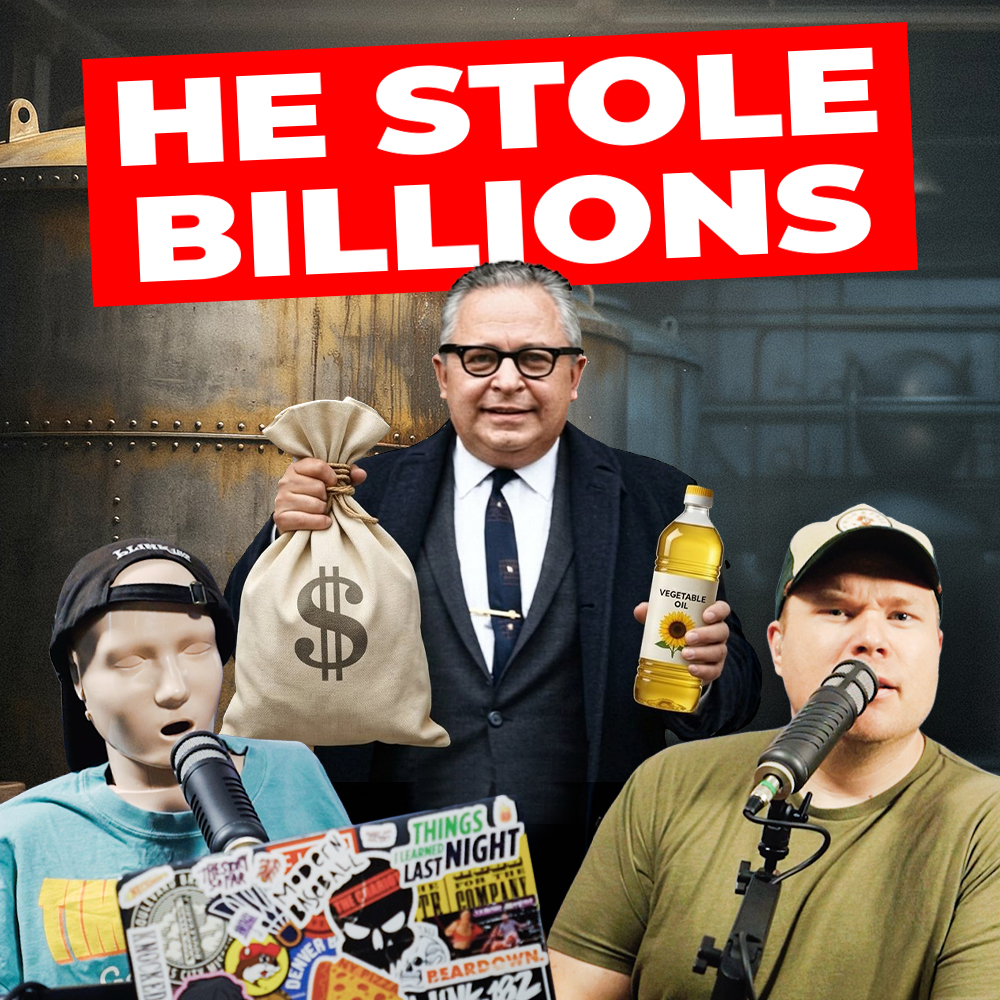
In November 1963, a vegetable oil company in Bayonne, New Jersey, triggered a financial crisis that nearly crashed the New York Stock Exchange. The man behind it was Anthony De Angelis, known as Tino, who had convinced banks and American Express that he controlled more soybean oil than existed in the entire United States. The collateral behind roughly $180 million in loans turned out to be mostly seawater.
From meat packing to fraud
De Angelis began working in the meat packing industry at the age of 16 and rose through the ranks until he ran his own company, Goble, a meat packing firm. When the United States passed the National School Lunch Act in 1946, creating the federal school lunch program, he saw a way to profit from government contracts.
He sold the government about two million pounds of meat, invoicing it for far more than it was worth and shipping substandard product in the process. The Securities and Exchange Commission eventually caught on, and Goble faced legal trouble and went bankrupt. De Angelis, rather than being shut out of business, simply started over.
Allied Crude Vegetable Oil
In 1955, De Angelis founded the Allied Crude Vegetable Oil Refining Corporation in New Jersey. The timing matched a boom in soybean oil. Refiners had found new ways to process it for food, plastics, and other products, and investors across Wall Street were buying soybean futures in large quantities. De Angelis built a refinery with dozens of large storage tanks and bought roughly a million pounds of soybean oil.
His goal was to corner the soybean futures market. A futures contract locks in a price for a commodity to be delivered later, and when prices rise the contract itself can be sold at a profit. De Angelis reasoned that if he became the largest holder of soybean futures, he could influence the price itself. The problem was that he did not have enough money to buy up the market. He needed credit, and his history of fraud made lenders wary.
The water in the tanks
The solution involved a warehousing division operated under American Express. That division sent auditors into company warehouses to verify inventory, then issued receipts in the American Express name confirming that the goods existed. Those receipts could be used as collateral to secure loans from banks.
De Angelis exploited a basic property of oil: it floats on water and does not mix with it. He filled his massive tanks almost entirely with water and left only a thin layer of soybean oil on top. When American Express inspectors climbed the tanks and dropped a measuring line, the oil appeared to fill the container. Inspectors were supposed to arrive at random intervals, but they kept a predictable schedule, often arriving on Fridays. Allied employees frequently offered to run the measuring stick themselves, and the inspectors let them.
De Angelis also had his crew build a system of underground pipes connecting the tanks. When an inspector finished checking one tank, oil could be pumped through the pipes to the next tank before it was checked, so the same small quantity of oil could be certified again and again.
Through this scheme, Allied obtained American Express warehouse receipts claiming it held 1.8 billion pounds of soybean oil, more than the entire national inventory recorded by the United States Department of Agriculture. No analyst compared the figure against that known national total. The receipts allowed De Angelis to borrow about $180 million from 51 different banks, equal to roughly $2.2 to $2.5 billion in later terms. He used the money to buy about 90 percent of the available soybean futures on the New York market.
The collapse
The Commodity Exchange Authority began investigating the unusually high prices of soybean futures and issued a report indicating they were overvalued. That triggered a sell-off, and the value of the futures was roughly cut in half overnight. Banks made margin calls, and when they went to claim the soybean oil backing their loans, they found the tanks nearly empty.
On November 19, 1963, the panic began. Two days later, two brokerage houses, Ira Haupt and Company and Williston and Beane, failed. More banks appeared likely to fold, raising fears of a market crash comparable to the 1930s.
On Friday, November 22, 1963, at 12:30 p.m. local time in Dallas, President John F. Kennedy was shot and killed. The news dominated attention, and the New York Stock Exchange closed to prevent a run. Because it was a Friday, the exchange stayed closed through the weekend, which gave officials time to arrange a response. The exchange taxed its member firms to cover the losses and repay the loans tied to the scheme, preventing a wider collapse.
American Express saw a run on its own stock. Its shares fell from around 56 the week before toward the 30s and kept dropping. Warren Buffett, watching the decline, recognized that the company’s core businesses, including its charge cards and travelers checks, remained sound and that only the warehousing division had failed. He bought a large stake in American Express, a move that became one of his first major successes.
De Angelis was convicted and sentenced to seven years in prison. He served about three. He later became involved in a similar fraud involving cattle and was caught again.
Things I Learned Last Night is an educational comedy podcast where best friends Jaron Myers and Tim Stone talk about random topics and have fun all along the way. If you like learning and laughing a lot while you do, you’ll love TILLN. Watch or listen to this episode right now!
Sources
- Salad oil scandal, Wikipedia
- Tino De Angelis, Wikipedia
- The Great Salad Oil Swindle, Wikipedia
- Great Salad Oil Scandal, MarketsWiki