


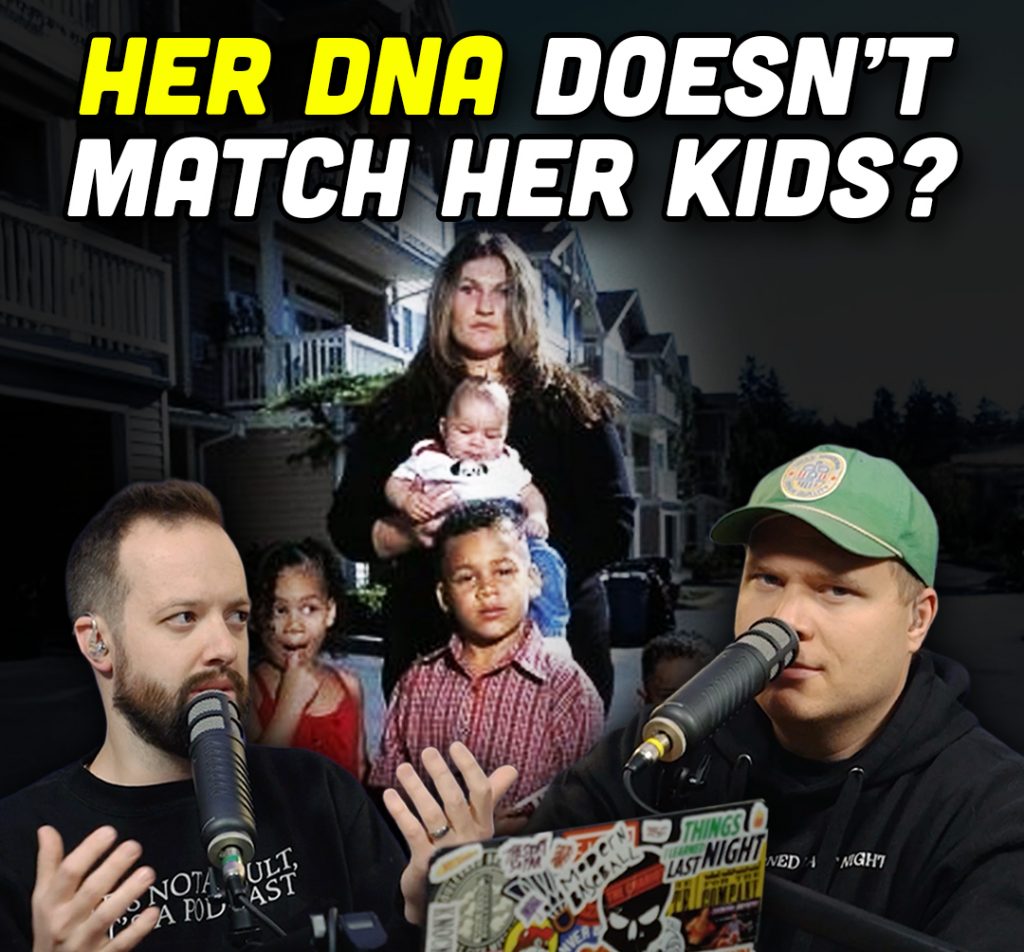
When Lydia Fairchild applied for child support in 2002, she thought it was a routine process. She was a young mother of two, pregnant with her third child, and wanted to ensure help from her children’s father. But what began as paperwork turned into one of the strangest legal and scientific mysteries in modern history—the case of Lydia Fairchild and her DNA.
A Routine Test Turned Nightmare
To confirm paternity, officials requested DNA samples from Lydia, her children, and their father. The results were shocking. The tests proved beyond a doubt that the father was biologically related to the children, but Lydia was not. According to the DNA tests, there was a 0 percent chance she was their mother.
Authorities suspected fraud. They believed Lydia was trying to claim benefits for children who weren’t hers. Despite her pleas that she had given birth to them herself, the DNA evidence said otherwise. She faced the prospect of losing her children and her credibility.
The Court Demands Proof
The court ordered a witness to be present at the birth of her third child. Officials wanted to see the delivery firsthand and test the newborn’s DNA immediately after birth. When the results came back, they again showed 0 percent match between Lydia Fairchild and her baby.
This deepened the mystery. How could a woman give birth to children who, by genetic testing, weren’t hers? Prosecutors accused her of using another woman’s embryos or faking the entire pregnancy.
The Search for Answers
Desperate, Lydia finally found a lawyer willing to take her case. That lawyer uncovered a nearly identical situation involving a woman named Karen Keegan in Boston. Keegan had needed a kidney transplant, and tests showed that her own children didn’t share her DNA either. Researchers discovered that Karen was a chimera: a person with two sets of DNA fused in one body.
This rare condition occurs when two embryos merge very early in pregnancy, combining to form a single person. Different tissues in the body may contain different DNA, depending on which twin’s genetic material became dominant in that area.
The Breakthrough Discovery
Using this insight, scientists tested more samples from Lydia Fairchild. While the first DNA tests from her skin and hair showed no match, deeper tissue samples revealed another genetic code: one that matched her children perfectly. Lydia Fairchild, like Karen Keegan, was a human chimera.
This discovery saved her case. The courts dropped the accusations, and Lydia kept custody of her children. Her story changed the way experts think about DNA evidence and the reliability of genetic testing.
What Chimerism Means for Science
The case of Lydia Fairchild and DNA challenges what many assumed about identity. Forensic and medical experts now understand that a small number of people carry more than one genetic blueprint. Some estimates suggest as many as one in eight people could have minor forms of chimerism without ever knowing it.
That means DNA testing, often considered foolproof, may not always tell the whole story.
A Rare Miracle with Lasting Impact
Lydia Fairchild’s ordeal is both terrifying and fascinating. She nearly lost her children because science hadn’t yet caught up with the complexity of biology. Thanks to her persistence and the precedent set by Karen Keegan, her case opened new research into genetic chimeras and reshaped how the legal system views DNA proof.
The story of Lydia Fairchild and DNA reminds us that even science can be humbled by nature’s mysteries.
Things I Learned Last Night is an educational comedy podcast where best friends Jaron Myers and Tim Stone talk about random topics and have fun all along the way. If you like learning and laughing a lot while you do, you’ll love TILLN. Watch or listen to this episode right now!
Sources
Related Episodes
Tell Us What You Think of This Content!
Don’t forget to share it with your friends!